
RenoMate field notes
How to Renovate a BTO Without an Interior Designer in Singapore (2026 Guide)
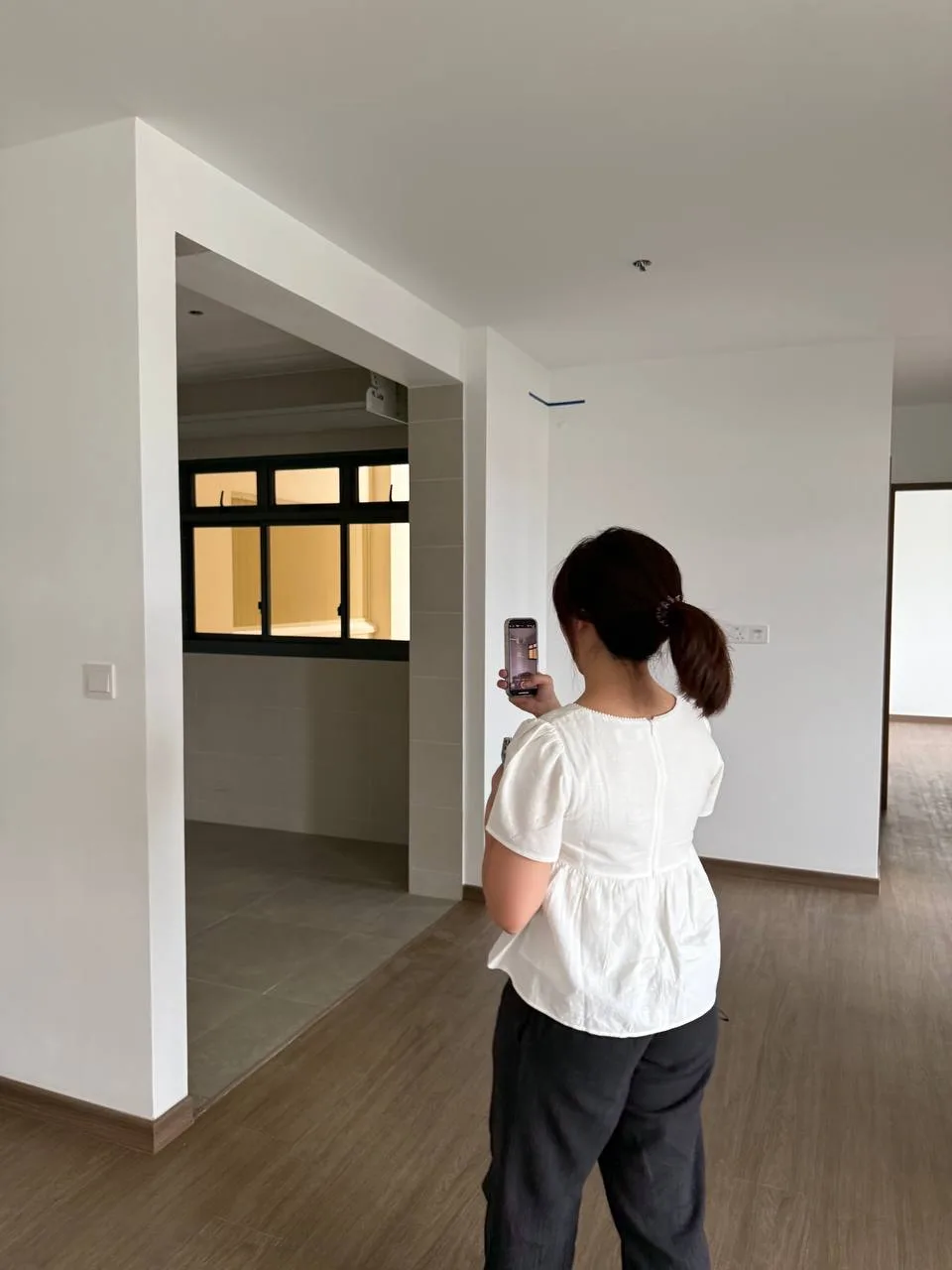
How to Renovate a BTO Without an Interior Designer in Singapore
Thinking of renovating your BTO without hiring an interior designer?
You can.
Many Singapore homeowners choose to work directly with contractors because they want greater control over their renovation budget, contractor selection and how their money is spent.
But there is one important consideration:
If you remove the interior designer or main contractor from the renovation, someone still needs to manage and coordinate the project.
That is often the part homeowners underestimate.
In this guide, we look at how you can renovate your BTO without an interior designer, the different routes available, what you will need to manage yourself, and how renovation project management can help if you prefer to engage contractors directly.
Do You Need an Interior Designer for a BTO Renovation?
Not necessarily.
Homeowners can engage contractors directly for different parts of their renovation, including:
- Carpentry
- Electrical works
- Partition works
- Tiling
- Painting
- Glass and aluminium works
- Hacking and demolition
- Flooring
- Plumbing
- Doors and other finishing works
This approach can provide greater visibility over pricing and more control over which contractors are appointed.
However, it works best when the homeowner already has a reasonably clear idea of the design, layout and finishes they want.
An interior designer may handle much more than the visual design of your home. Depending on the firm and package, they may also coordinate contractors, manage the project schedule, arrange site works and handle renovation issues.
Therefore, when you decide not to engage an ID, the question is not only:
“Who will design my home?”
There is another equally important question:
“Who is going to manage my renovation?”
3 Common Ways to Renovate Your BTO
For most homeowners, there are three practical approaches.
Option 1: Engage an Interior Designer or Main Contractor
This is the traditional renovation model.
You appoint one company to take responsibility for most or all of the renovation.
Depending on the company, its scope may include:
- Design and space planning
- Material selection
- Quotation preparation
- Contractor appointment
- Scheduling
- Site coordination
- Progress monitoring
- Defect rectification and handover
Why homeowners choose this route
It can provide a relatively convenient and hands-off experience because there is one main point of contact managing the project.
Things to consider
You may have less visibility over individual subcontractor pricing, and contractor selection will normally be controlled by the ID or main contractor.
The final renovation cost may also include design, project management, overheads and margins within the overall quotation.

Option 2: Engage Direct Contractors and Manage the Renovation Yourself
Another option is to appoint each contractor directly.
For example:
- One contractor for electrical works
- One contractor for carpentry
- One contractor for tiling
- One contractor for painting
- Another contractor for glass, doors or aluminium works
Direct contractors can be sourced through referrals, online platforms, renovation groups or even advertisements around new BTO estates.
The main advantage is control.
You can compare quotations, negotiate directly and decide exactly which contractor you want to appoint.
But there is a trade-off.
You become the project manager.
You will need to coordinate:
- Site dates
- Contractor access
- Measurements
- Work sequences
- Deliveries
- Installation schedules
- Changes and variation orders
- Site problems
- Rectification works
- Final handover
You will also need to ensure that one contractor's delay does not affect the next contractor.
For homeowners with renovation experience and sufficient time, this arrangement can work well.
For homeowners working full-time or managing several contractors for the first time, it can quickly become demanding.
Option 3: Use Direct Contractors With a Renovation Project Manager
There is a third option that sits between hiring a traditional ID and managing everything yourself.
You can appoint contractors directly while engaging someone to manage and coordinate the renovation on your behalf.
This is the model offered by Renomate.
Renomate provides homeowner-side renovation project management.
Instead of acting as your interior designer or bundling every contractor into one renovation package, Renomate helps coordinate the project while allowing homeowners to retain greater control over contractor selection and renovation spending.
In simple terms:
You choose the contractors. Renomate helps manage the renovation.
This can be suitable for homeowners who already know what they want but do not want to spend their evenings and weekends coordinating every contractor themselves.
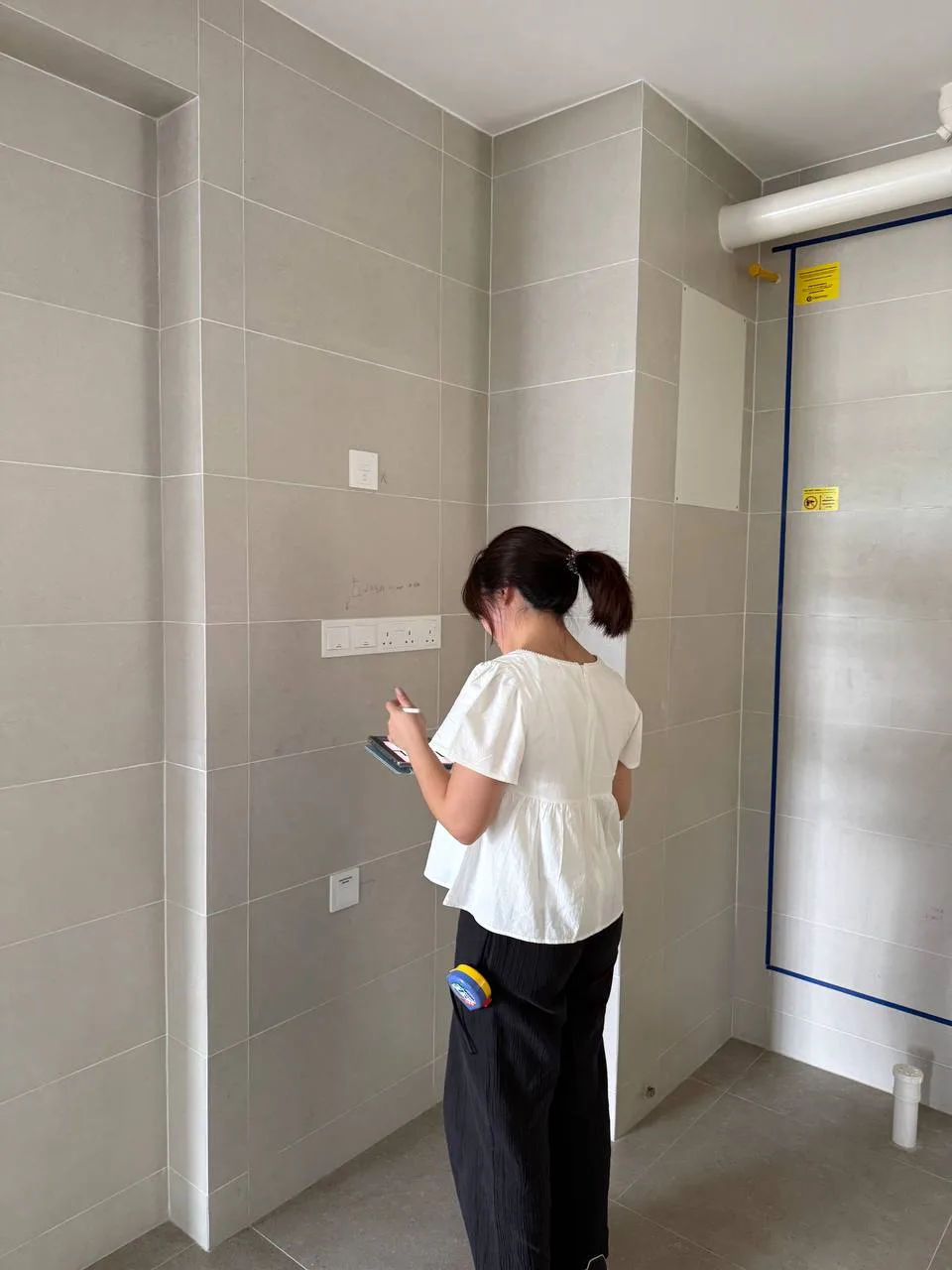
What Actually Needs to Be Managed During a BTO Renovation?
Renovation is not simply a matter of booking several contractors and asking everyone to turn up.
The sequence of work matters.
A typical renovation may involve:
- Site protection and demolition
- Electrical and plumbing preparation
- Masonry and tiling
- Ceiling and partition works
- Painting
- Carpentry installation
- Glass and aluminium works
- Electrical fittings and plumbing fixtures
- Final touch-ups
- Defect checks and handover
A delay or mistake at one stage can affect several contractors further down the schedule.
For example:
If electrical points are not confirmed before carpentry fabrication, changes may need to be made later.
If tiling is delayed, carpentry or installation works scheduled afterwards may need to be postponed.
If measurements are taken too early, completed site dimensions may differ from what was originally recorded.
This coordination work is one of the major functions traditionally handled by an ID or main contractor.
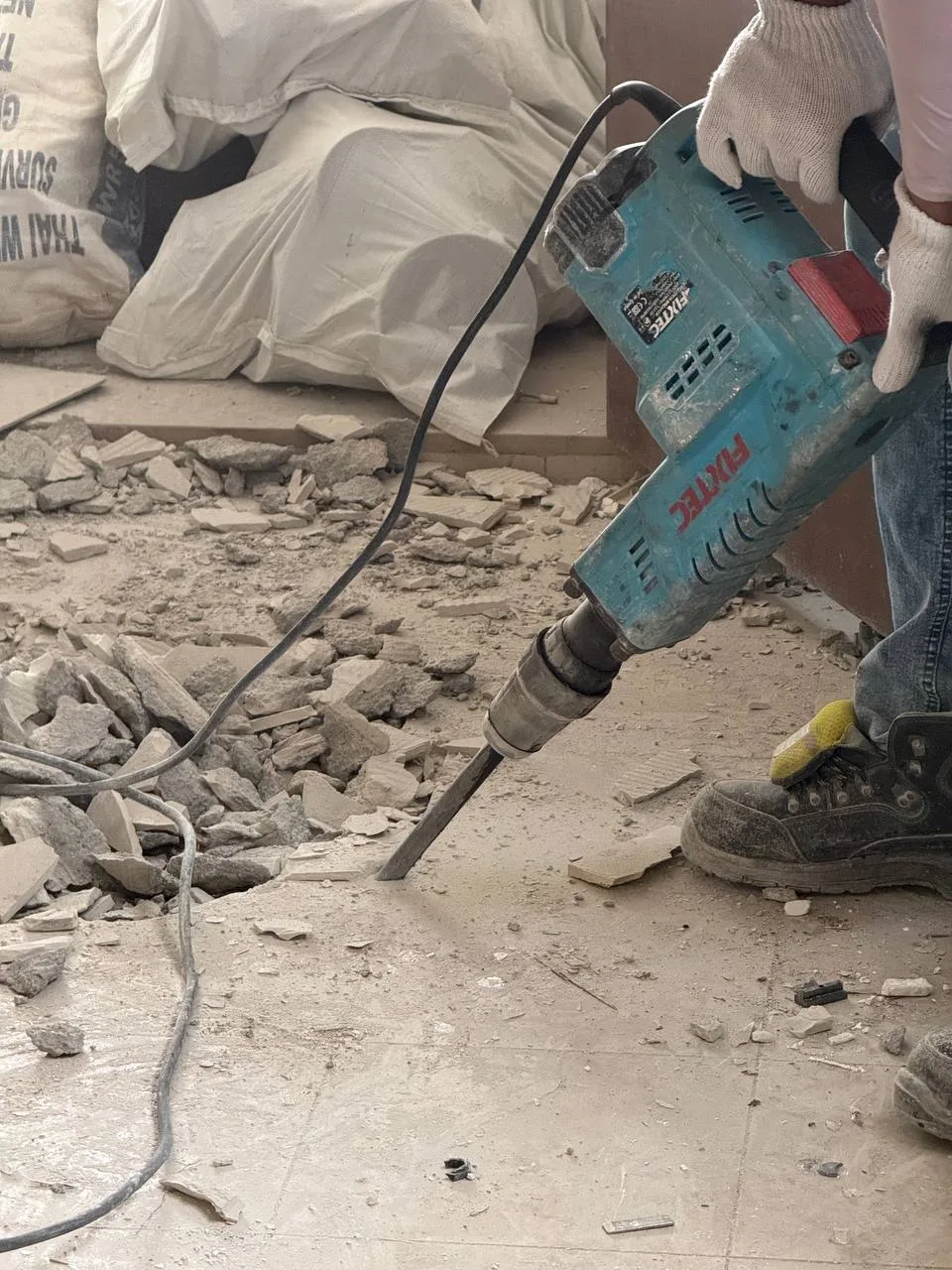
Recommended caption:
Different renovation trades depend on one another, making proper sequencing important.
What Can Go Wrong When Managing Contractors Yourself?
Working directly with contractors can provide greater cost visibility, but poor coordination can also create additional expenses and delays.
Here are some common situations homeowners may encounter.
1. Contractors Blaming One Another
When several contractors are involved, responsibility can sometimes become unclear.
The carpenter may say the wall is uneven.
The tiler may say the masonry work caused the problem.
The electrician may say the electrical point was changed after installation.
Someone eventually needs to identify what happened and coordinate the solution.
2. Scheduling Conflicts
Contractors usually work across multiple projects.
If one contractor misses an agreed date, several other trades may need to be rescheduled.
A two-day delay can sometimes affect much more than two days of the overall renovation.
3. Uncontrolled Variation Costs
Changes during renovation can result in additional charges.
Without proper records, homeowners can lose track of:
- What was originally quoted
- What was changed
- Who requested the change
- What additional amount was agreed
- Whether the variation has actually been completed
4. Incorrect Work Sequencing
Certain works need to happen before others.
Installing something too early can result in it being damaged, modified or removed later.
Good sequencing therefore affects both the project schedule and the final renovation cost.
5. Limited Site Supervision
Many homeowners can only visit their BTO after work or during weekends.
By the time an issue is discovered, the contractor may already have moved on to another stage of work.
Regular progress monitoring helps identify issues earlier.
📷 PHOTO 5 — SITE ISSUE / DEFECT CHECK
Suggested photo: Measuring tape checking cabinetry, tile alignment, wall finish, electrical point or defect inspection.
Recommended caption:
Spotting issues earlier can reduce unnecessary rectification work later.
How Renomate Helps Manage Direct Contractors
Renomate was created for homeowners who want more control over their renovation without personally managing every contractor and site issue.
Depending on the agreed project scope, renovation project management may include:
Contractor Coordination
Coordinating the different contractors involved in the renovation and ensuring everyone understands the required sequence.
Renovation Scheduling
Planning when each contractor should enter the site and how different work stages affect one another.
Progress Monitoring
Keeping track of what has been completed, what remains outstanding and what needs attention.
Site Coordination
Helping address day-to-day coordination issues between contractors.
Variation Tracking
Keeping better visibility over changes, additional works and outstanding decisions.
Delivery & Installation Coordination
Helping coordinate scheduled deliveries, installations and contractor attendance.
Defect Identification
Identifying incomplete or defective works that require rectification.
Handover Coordination
Helping close outstanding items before renovation completion.
Interior Designer vs Direct Contractor vs Renovation Project Manager
Here is a simple comparison.
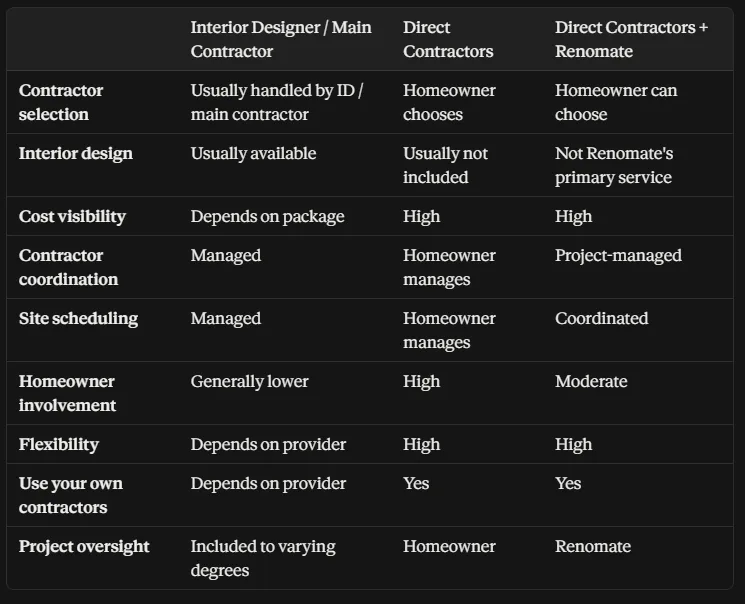
There is no single renovation model that is suitable for every homeowner.
The right approach depends on your:
- Budget
- Available time
- Renovation experience
- Design requirements
- Preferred level of involvement
- Need for contractor flexibility
Who Should Consider Renovating Without an ID?
Working with direct contractors may be suitable if:
✓ You already know the design and layout you want.
✓ You have your own contractor contacts.
✓ You want to compare quotations from individual trades.
✓ You want greater control over contractor selection.
✓ You want more visibility over where your renovation budget is going.
✓ You do not require extensive interior design services.
However, if you want to use direct contractors but do not have the time or experience to coordinate everyone yourself, renovation project management may provide another option.
Can I Use My Own Contractors With Renomate?
Yes.
One of the main ideas behind Renomate is giving homeowners the flexibility to use their own contractors.
You may already have:
- A carpenter recommended by your family
- An electrician you trust
- A tiler recommended by a neighbour
- Your own painter
- Contractors you sourced directly
Instead of requiring homeowners to use one fixed contractor network, the project can be managed around the appointed team, subject to the agreed project requirements and scope.
This gives homeowners greater flexibility while still having someone help coordinate the project.
Is Renovating Without an Interior Designer Cheaper?
It can be, but it is not automatically cheaper.
Engaging contractors directly may reduce certain layers of overhead or management costs.
However, potential savings can disappear when there are:
- Mistakes
- Rework
- Contractor delays
- Measurement errors
- Poor sequencing
- Uncontrolled variations
- Incomplete works
Instead of comparing only individual quotations, homeowners should look at the overall cost of completing the renovation properly.
The cheapest contractor quotation is not always the lowest final renovation cost.
The objective of a well-managed direct-contractor renovation is therefore to combine:
Cost visibility + contractor flexibility + proper project coordination
Can I Renovate My BTO Without Any Renovation Experience?
Yes, although the complexity of the project matters.
For a relatively simple renovation involving only a few contractors, homeowners may be comfortable coordinating everything themselves.
A more complicated renovation may involve:
- Custom carpentry
- Electrical changes
- Plumbing works
- Tiling
- Ceiling works
- Multiple deliveries
- Glass works
- Doors
- Appliances
- Several separate contractors
As the number of moving parts increases, so does the amount of coordination required.
This can be particularly challenging for homeowners who work full-time or cannot regularly visit the renovation site during working hours.
So, Do You Really Need an Interior Designer?
Not necessarily.
An interior designer can be valuable when you require professional design input, space planning, material selection and someone to manage the overall renovation.
But homeowners who already know what they want have alternatives.
You can:
Option A — Hire an ID or main contractor
Have one company manage the design and renovation.
Option B — Hire direct contractors and manage them yourself
Retain maximum control but take responsibility for project coordination.
Option C — Hire direct contractors with a renovation project manager
Retain contractor flexibility while receiving help managing the renovation.
The important thing is understanding what happens when you remove the traditional ID from the equation.
You may be removing the design service.
But you may also be removing the person responsible for coordinating the renovation.
Make sure someone is responsible for that second role.
Looking for Someone to Manage Your BTO Renovation?
Renomate provides homeowner-side renovation project management for BTO and resale homeowners in Singapore.
If you:
- Already have your own contractors
- Want to source contractors directly
- Want better visibility over your renovation
- Need help coordinating different trades
- Do not have time to constantly manage the site yourself
Renomate can help manage and coordinate the renovation from planning through to handover.
Your renovation, project-managed.
Visit sgrenomate.com to learn more about Renomate's renovation project management services.
Frequently Asked Questions
Can I renovate my BTO without an interior designer?
Yes. Homeowners can engage individual contractors directly instead of appointing an interior designer, provided they are comfortable managing the design, contractor selection and renovation coordination themselves.
Can I engage my own contractors for my BTO?
Yes. Homeowners can engage different contractors for different renovation trades. Certain regulated works may be subject to HDB requirements and the appropriate licensed or registered contractors.
Who manages contractors if I don't hire an interior designer?
You can manage them yourself, appoint a main contractor, or engage an independent renovation project management service such as Renomate to help coordinate the project.
What does a renovation project manager do?
A renovation project manager helps coordinate contractors, schedules, site activities, progress, outstanding works, variations and handover matters on behalf of the homeowner.
Is using direct contractors cheaper than using an ID?
It can reduce certain costs, but it is not automatically cheaper. Poor coordination, rework, delays and variations can increase the final renovation cost.
Can Renomate manage contractors that I sourced myself?
Yes. Renomate's model allows homeowners to retain their own contractors while receiving project management and coordination support.